Friday, 4 January 2019

Does Late-Night Eating Cause Weight Gain?

As the legend goes…

If you’re trying to lose weight, don’t eat right before bed.

The thought is that your metabolism slows down at night to prepare for sleep.

Which means if you snack before bedtime, the food resides in your stomach all night long, and unless you’re a sleepwalker, you won’t burn off your meal and your food turns to fat.

That’s why conventional wisdom advises against eating late at night.

It’s summed up in the quote, “Eat breakfast like a king, lunch like a prince, and dinner like a pauper.”

Is all this true?

Is ANY of it true?

Great questions. Should people attempting to lose weight limit their late-night eating, and is there science or studies to back this up? After all, we love science here at NF.

Today, we are tackling these questions:

  • What effect does eating late at night have on our bodies?
  • Should you eat an early dinner for weight loss?
  • Is a big breakfast the answer?
  • Where does intermittent fasting fit into all this?

Let’s begin.

SHOULD YOU EAT LATE AT NIGHT?
To answer our question on whether a late night meal is going to stick to your gut, it’ll be helpful to explore where this advice originates.

It comes down to our circadian rhythm, which tells our bodies what time of day it is. If everything is functioning properly, during the day you will feel alert. At night, when it’s time to wind down and sleep, you’ll start to feel tired.

Think of it as an internal clock that helps prioritize bodily functions. Waking, eating, sleeping, etc.

So what’s this got to do with late night chow?

The argument goes that having food past a certain hour goes against our biological clock. Eating outside of our circadian rhythm means our metabolism might not be in proper working order. Which could lead to fat gain. That’s the gist of the argument against late night eating.

And there might be some evidence it’s true.

Experiments in mice support the hypothesis that eating late at night causes fat gain.[1] If you’re picturing a group of mice arguing over what kind of food to get delivered at midnight, I’m right there with you.[2]

One group ate during normal waking hours. The other, at night, against their normal circadian clock. Everything else remained constant, including their exercise and activity.

And all things being equal, the late night eating mice gained more weight.

These are interesting observations, but do they tell the whole story? Is all of our knowledge around late night eating advice dependent on experimentation with mice?

There are some studies on humans that do show a correlation between late night eating and weight gain.[3] And again, those eating late at night tend to gain more weight than those who don’t.[4]

However, if you’re reading Nerd Fitness, you’re smart. And you know that correlation doesn’t prove causation.

There may be a correlation between wearing a stormtrooper uniform and death, but it doesn’t mean the uniform CAUSES death.

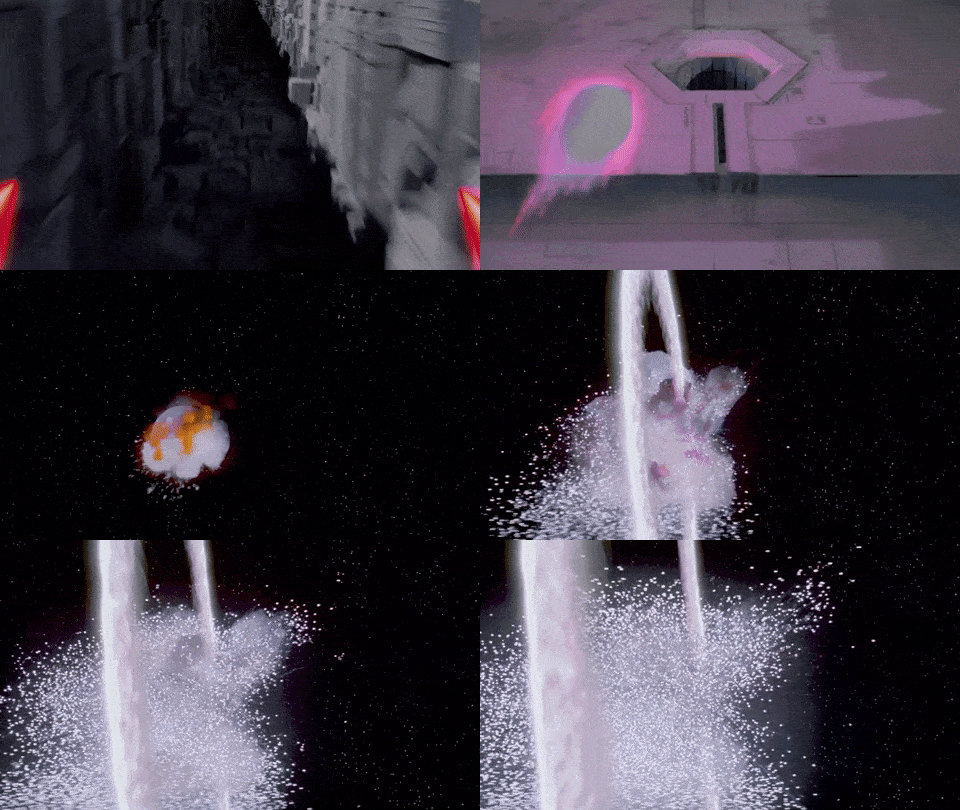
That would be a major defect, like creating an exhaust port that leads straight to your base’s biggest weakness. Oh wait.
Outside of correlation, is there anything physiologically different about eating calories at night versus the day?

DOES LATE NIGHT EATING CAUSE WEIGHT GAIN?
First things first. Let’s talk about your metabolism slowing down at night.

That’s generally what the advice on skipping late night meals rests on. If you eat late, when your metabolism is naturally slowing down (recall the circadian rhythm?), the food is more likely to be stored as fat instead of being burned off.

Yeah, that’s not true.[5]

Your body expends plenty of energy when you sleep!

For example, the process of REM (Rapid Eye Movement) burns quite a bit of energy because our brains are very active during this stage. This is also the stage of sleep where you dream the most. So when you are dreaming of battling a dragon or showing up to school naked, you’re burning calories. Not as much as literally battling a dragon or showing up to school naked, but enough to keep your metabolism engaged.

Also, our bodies do a lot of repair work on our cells, tissue, and muscles at night. All of which requires calories.

Plus, your body needs to do normal things too like breathing, pumping blood, keeping all of your organs functioning, and stealing the blankets from your partner.

When you factor all of this in, your metabolism only slows down about 15% during the night[6]

And even THEN, with this ‘gasp,’ 15% slowdown, it’s not enough to make you more likely to gain fat by eating later at night compared to during the day. So say the researchers at Oregon State University.[7] Granted, researchers at OSU did their studies on monkeys, but their conclusion matches other research on the subject.[8]

Now, to keep things in perspective and put us back on track.

If you look hard enough, you’ll find studies that show eating late at night actually INCREASES your overnight metabolism.[9] After all – your body needs to burn calories to process the calories you just consumed, right?

That TOO makes sense!

So if our metabolism is still running when we sleep, and calories don’t have a greater impact at night, what’s with the correlation between late night eating and weight gain in humans?

Why do people that eat at night tend to gain more weight compared to people that don’t?

MORE IMPORTANT THAN WHEN YOU EAT, IS HOW MUCH YOU EAT

So what’s causing late-night eaters to gain more weight, if it’s not a slow metabolism?

It’s actually a simple answer: eating anything between dinner and bedtime is considered an extra meal.

More meals equals more food, which equals more calories. Which could lead to more weight gain.

That’s right. People who are eating late at night are eating that meal in addition to all of their other meals. They are overeating, and thus, their body is putting on weight. The timing of the meal is irrelevant, it’s total calories consumed!

To reiterate: it’s not some physiological response to food past a certain hour that will cause weight gain. It’s just that those who eat late at night are probably eating more than those who don’t.[10]

If a late night snack helps you eat smaller meals throughout the day, great!

However, more often than not these late night snacks are just extra calories on top of the meals already eaten. Something we do mindlessly with no real intention. And this can be a recipe for disaster.

This is the real concern of late night eating: extra calories consumed. Not that our body’s metabolism slows down to hibernation levels at night. It’s that we are likely not planning on these extra calories at night.

And that’s not all.

There’s also the topic of food choices to consider. The reality is there aren’t as many healthy meal options late at night versus when the sun is out. People who eat late at night might have to depend on delivery like pizza. Or Taco Bell might be the only thing open at 3am. So it might not be the hour, but the food itself that is the concern.

These are foods that are nutritionally deficient, calorically dense, and very easy to mindlessly over consume in mass quantities.

Plus, lots of late night snacks that people eat are likely junk food. As bariatric physician Dr. Caroline Cederquist says, “At midnight, people will rarely make chicken and salad. They will eat ice cream or chips, the high-fat or high-sugar foods that our bodies store so effectively as fat.”[11] This point argues the central problem of late night eating lies with these high-calorie foods, which are easy to overeat, and don’t contain a lot of nutrition. If you eat these types of snacks consistently, weight gain could be the outcome, no matter the time of day you eat them.

This may very well explain the correlation between late night eating and fat gain. Which matches our philosophy here at Nerd Fitness, “You Can’t Outrun Your Fork” (Scope out Rule #4). It also correlates to America’s love of snacks, and America’s obesity problem: I cover this in our article on snacking.

So if you are going to eat late at night, stick to REAL food whenever possible.

Meats, vegetables, fresh fruit, etc. Stay away from processed junk food, which seems to be the real danger of eating before bed. Eating an apple with some almond butter before bed is a lot different than cookies. If you want help adjusting your snacks to REAL food, check out our Beginner’s Guide to Healthy Eating. That article will walk you through how to create habits on eating real, natural, nutritious food. Foods you can eat any time of day.

But let’s also be realists here, because I love junk food too. If you want to eat ice cream or have a cookie before bed, go for it! Just PLAN ahead by eating smaller portioned meals earlier in the day, and make up for it the next day by eating a significantly smaller breakfast.

If all this talk on the timing of meals and eating REAL food stresses you out, and you want to be told exactly what to do, we can help!

Our uber-popular 1-on-1 coaching program pairs you with your own Nerd Fitness Coach who will get to know YOU, your goals, and your lifestyle, and develops a plan that’s specific to not only your body, but also to your schedule and life. We take the guesswork and uncertainty out of the timing of meals and overall diet, to help busy people just like you level up their lives.

Wanna see if we are a good fit for each other? Click on the big box below to schedule a free call! We’d love to talk with you, no matter what.
SHOULD YOU TIME YOUR MEALS?

I want to make one more point. After saying everything I said above, there could be some benefit to planning and restricting the time you eat during the day.

I’m a big fan of scheduled eating times and scheduled fasting times – this is a generally referred to as intermittent fasting.

It’s not a diet per se, but a diet pattern.

I personally only eat calories in an eight-hour window each a day. For example, if I start eating at noon, I’ll eat my last calorie by 8pm. This means no late night snacks for me. This time-restricted eating strategy works as a great way to limit overall caloric intake.

Here’s why: although I eat bigger meals for lunch and dinner, skipping breakfast results in the net effect of “Steve eats less overall.” No snacks, no multiple small meals throughout the day. Just two big meals to fuel my needs.

If you’re looking to lose weight, intermittent fasting could be a strategy for calorie control that works for you. Specifically, if you can’t help but eat late at night for whatever reason, then cutting out breakfast and making lunch the first meal of the day could mitigate a lot of the additional calories you consume later. Now, intermittent fasting isn’t for everybody, and it affects men and women differently, so be sure to read our Beginner’s Guide to Intermittent Fasting to get the full details. We cover the ins and outs of intermittent fasting, and how to create a practice that works for your situation.

Many NF readers have experienced success with intermittent fasting. After all, it’s one less meal to worry about. You can use the extra time to focus on what your two healthy meals should be, instead of worrying about a bunch of small meals and snacks throughout the day.

If you want to learn more about IF, and download a worksheet to help you get going, you can grab our Beginner’s Guide to Intermittent Fasting FREE when you sign-up in the box below:

CONCERNS OF LATE NIGHT EATING

I couldn’t end this article without mentioning two possible concerns on late night eating, outside of extra calories and food quality.

I want to talk about how late night eating might disrupt sleep itself.

If you’re staying up late at night to eat, you might be doing this at the expense of going to bed earlier, which could lead to sleep issues. As we cover in our article on sleep, when you’re sleep deprived and tired, your body tends to crave more food. More calories to fuel your exhausted body. And if you’re already staying up later to eat more food, you’re creating a vicious cycle.

Crapola.

As pointed out by science and thermodynamics, losing weight is about burning more calories than you consume. Being exhausted and needing more calories to get through the day makes this much more difficult.

So if you’re eating late at night, make sure that you’re still getting plenty of good shuteye. Don’t stay up all night mindlessly snacking. A well-rested nerd is a happy and healthy nerd.

Also, one last thing: there is some evidence that a late night meal might disrupt the quality of your sleep. [12] This might come back to our circadian rhythm, as a late night meal does seem to have an impact on delaying the stage of REM sleep.

This might be the real danger of late night eating.

Not that the calories will stick to your stomach, but that eating late at night might disrupt the sleepy time you are about to embark on by shifting your body’s priorities to digestion, thus throwing off your circadian rhythm as you prepare for sleep.

So forgo late night eating?

My advice: experiment on yourself. No not like that.

With your food and the timing of your food consumption.

A lot of these studies are at the early stages, and more research needs to be done to reach concrete conclusions on the health impact of the timing of our meals. So:

  • If a meal before bed helps you skip breakfast the next morning so you can rock your day, do it!
  • If you notice a late night meal makes you toss and turn at night, try eating a little bit earlier.

I always encourage self-experimentation, and that holds true for the timing of meals. If your life sucks without breakfast, EAT BREAKFAST. If you do better with a good, healthy snack before bed, EAT YOUR LATE NIGHT SNACK.

For me personally, I know that eating too much food directly before hitting the hay leads to a night of tossing and turning without any awesome dreams of me with a jetpack flying around the world.

But, to each their own.

You’re an adult (I assume).

So don’t get so caught up in studies that you ignore what your own body is telling you. Do what works for you – and if eating late at night is causing you to gain weight, cut back on the calories and see if that changes things.

One last important point:

If you can’t help yourself from eating sweets and snacks late at night, then plan for it! Eat smaller dinners and breakfasts, or have one less snack throughout the day. We don’t plan for perfection. We plan for Murphy’s law – anything that can go wrong will go wrong.

And just hoping you stop eating late night food isn’t a strategy. So instead, plan for the worst and set yourself up to succeed even when you succumb to the late night cravings!

That about does it for this article. It’s up to you to decide if late night eating works for you or should be avoided. Either way, the next time you hear someone tell you to eat dinner like a pauper, maybe take it with a grain of salt. Nod politely, and then get back to doing what’s best for you.

Now I want to hear from you!

          Do you eat late at night or do you restrict your eating window?

          Does a late night snack help you prepare for the next day?

          Or does it disrupt your sleep?

Let me know in the comments.

Sweet (or unsweet) dreams!

Steve,

PS: ONE FINAL TIP: if you’re going to eat ice cream late at night, don’t eat it right out of the carton with a spoon. Get a scoop, put it in a bowl, and go sit down. You’ll eat half as much, and hate yourself half as much the next day.

PPS: I’ll wrap up this article by again mentioning our 1-on-1 Online Coaching Program. If you’re worried about losing weight, and not sure if your late night meals are helping or hurting, we can help! We’ll get to know you, your situation, and your goals, to come up with a plan! Schedule a call with our team to see if it’s a good fit for your situation!

###

All photo sources can be found in this footnote right here. [13]


source https://www.nerdfitness.com/blog/does-late-night-eating-cause-weight-gain/

Thursday, 3 January 2019

How Jeff the Doctor, Engineer, and Startup Junkie finally put himself first: A success story

Today, I have a different kind of success story for you.

It’s maybe the best example I’ve ever seen for “just knowing what to do” isn’t enough when it comes to getting healthy!

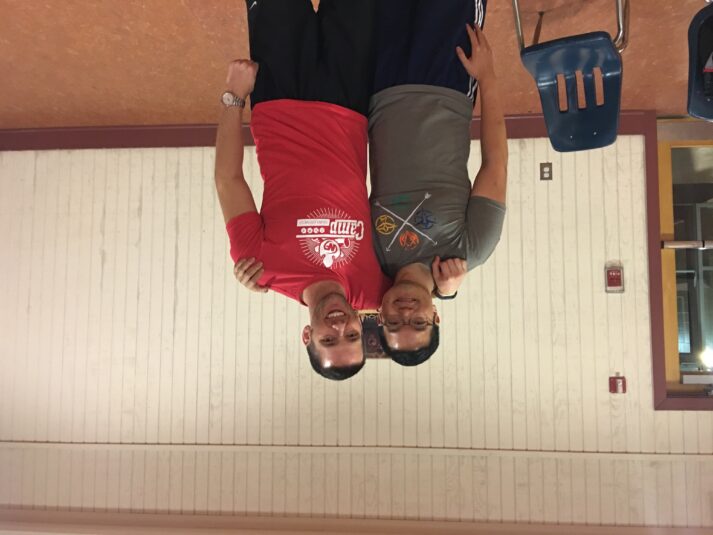
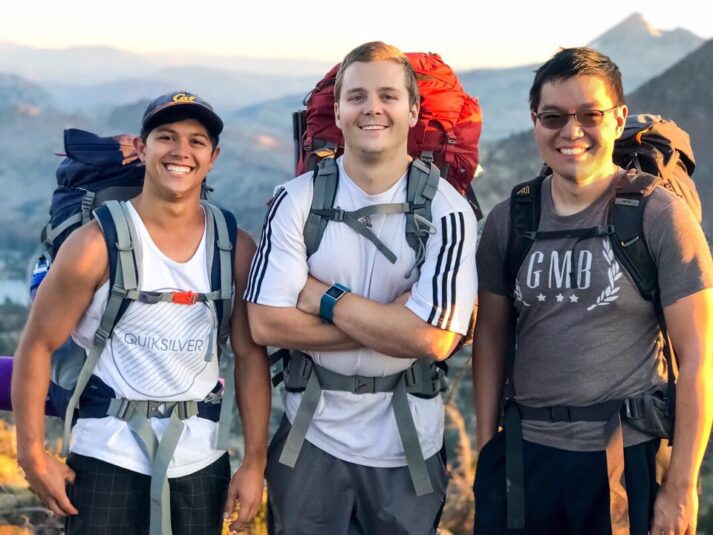
Meet Jeff (hey, that’s me next to him!):

We met a few years back at Camp NF, one of our in-person events back in 2016 – he’s one of the most accomplished people I know (he started MED SCHOOL at age 16). However, even for a guy as smart as he is, he struggled with actually getting consistent healthy results and getting out of his own way for years.

Over the past few years, as Jeff’s startup life got busier, his health took more and more of a backseat:

  • Jeff has founded multiple start-ups and is currently running one.
  • His schedule, both for travel and eating, is completely erratic.
  • He spent most weekends of 2018 on airplanes, flying red-eye flights.
  • He kept chasing the next fad, changing his mind every other day.

And his brain wouldn’t slow down! Jeff really struggled with “analysis by paralysis,” thinking about working out way more than he actually worked out.

If this sounds like you and your brain, maybe you can relate?

It took Jeff partnering with Jim, our lead trainer in the NF Coaching Program, for the past year to slow down long enough to start to see results that would stick.

And slowing down isn’t easy for this guy.

Jeff’s brain is always going a million miles an hour, he practically lives on airplanes and red-eye flights, has a super varied eating and workout schedule, and no day is the same for him thanks to his entrepreneurial career!

I’m really proud that Jeff is one of our 1-on-1 coaching clients, and that we were able to get him the results that had eluded him for the majority of his life up to that point.

I love that even as a busy entrepreneur, he’s seeing the “return on investment” of investing in himself with coaching and taking care of his own health! If this sounds like you, we’d love to hear how we could potentially help you at Nerd Fitness Coaching – simply click the button below to learn more!

I’ve chopped this interview into multiple sections, so feel free to pick the sections that you’re most interested in!

How Jeff managed to get his own brain out of the way…

Readers of Nerd Fitness tend to be on the smarter side of average.

Like you. You smart person you.

Jeff is on a different level:

  • He skipped high school and started college at 13.
  • He began med school at 16.
  • He became the second youngest doctor on record at age 20.
  • After his fellowship, he got an MBA from UCLA.
  • He studied machine learning in Scotland.
  • He’s now running a startup in Berkeley, CA.

In other words, Jeff puts the NERD in Nerd Fitness.

In my emails back and forth with Jeff to share this story with you today, I kept thinking two things:

  • This guy is gonna take over the planet one day, so I’m glad he likes Team Nerd Fitness!
  • I can totally see why he struggled with getting in shape in the past!

So this is what I wanted to ask him about.

STEVE: You have tried and done many different exercise routines, diet strategies, and everything in between. What has your life been like in that time?

JEFF: In 2014 and 2015, I joined an amateur gymnastics club and really enjoyed the experience.

Unfortunately, when I doubled the number of overnight shifts worked to 200+ nights a year, I developed recurrent upper back/shoulder issues (too much radiology work + muscle hypertrophy from gymnastics) I stopped going to gymnastics altogether, and things deteriorated quickly.

Left to my own devices in 2016 and 2017, I barely worked out at all, and barely stuck to any diet. This is how I gained 20-odd pounds across those years.

STEVE: You’re a doctor and engineer, you have an MBA, and have started multiple startups. You get bloodwork done regularly, and you know your health and fitness information inside and out.

Why do you think you weren’t able to crack the code earlier when it comes to your health and fitness? You had all the information and tools you needed right?

JEFF: I don’t think doctoring, tech, or smarts necessarily help in the pursuit of health. On a side note, there are lots of different kinds of smarts, and the kind I have is definitely limited to very specific applications

Actually, each of these probably works against you, all things considered. It’s kinda like when we say, “Doctors make the worst patients.”

To get (and stay) in shape, I think it comes down to:

  • Consistency, day in and day out.
  • Enjoying something about working out.
  • Building a set of habits that you return to instinctively when life gets busy.
  • Being surrounded by a support network of people and environments that help you get and stay in shape.
  • Sufficient sleep, and the practice of de-stressing in some way.

Unfortunately, those are the 5 things I feel like I have to battle each day:

  • Thinking too much instead of acting.
  • Not actually enjoying working out. I don’t get the endorphin rush at all. Trying different sports and group activities helps, but even getting back to a sport I love like gymnastics has been remarkably difficult mentally. I’ve also found the more I aim to do HIIT, the more I subconsciously avoid cardio altogether.
  • Rarely sticking with something long enough to build a set of habits.
  • Spending almost every weekend in the airport & on red-eye flights, flipping between night and day shifts every other week, having completely variable meal & workout schedules, and lots & lots of meetings.
  • Usually not getting enough sleep, and not making the time to meditate or de-stress much either.

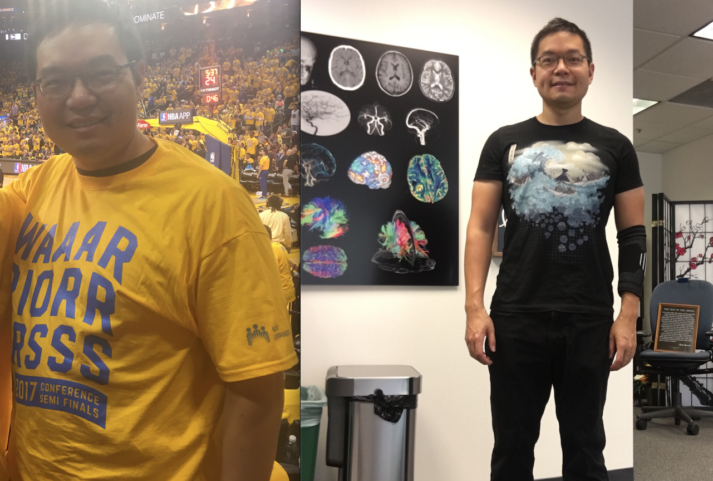
Fortunately, I’ve managed to have some success keeping the demons at bay in 2018 – as you saw in the photos above, and it’s how I ended up where I am today.

How Jeff Lost 30 Pounds By Focusing on his Diet

With Jeff’s brain being incredibly analytical you can bet he was crazy detailed with his tracking, his meals, and his metrics. You’ll see some of those specifics below,

(Note: if you’re somebody with 50-100+ pounds to lose, don’t get lost in the specifics below! Check out a story like Leslie (100+ pounds lost) or Anthony (200 pounds lost)!)

STEVE: You started working with Jim from NF Coaching back in January – And since then you’ve transformed pretty dramatically, losing 30+ pounds even while working and traveling like crazy.

Can you get into the details? What strategies worked for you?

JEFF: I started the year on a low-fat paleo-ish diet for the first six months (lots of ground meat, sauteed kale, and occasionally some oatmeal in the morning).

Because I travel a lot, and flip days and nights working, my diet varied pretty dramatically.

That got me from just over 195 lbs (“before”) down to about 170-175 lbs.

I hovered there for months and months.

In June, the weight had been hovering for about a month, and I decided to try to full-blown Keto.

I measured every meal to 25g of fat, 21g of protein, and nearly 0 carbs. I stayed in the 5 – 15g / day carb range, and entered ketosis immediately.

Keto didn’t really work for me physiologically.

My weight was remarkably stable day to day while on Keto, right around the 168 – 170 range over 2 months.

At the end of August, I got a follow-up cholesterol/lipid panel just to check where things were at — and it turns out I’m in the small subset of people whose cholesterol spikes to ridiculous levels on Keto [studies have shown a subset of people with cholesterol levels very sensitive to diet].

I stopped Keto immediately, and went back on low-fat Paleo, which got me back to the weight hovering around 170.

I went on a vacation to Greece for the first time in September, where I gained five pounds (from eating a lot more than I should : )

STEVE: I hear ya man. Keto doesn’t agree with me either, but I know it works for some! So tell me what happened specifically. So I’m glad you found low fat Paleo-ish to work for you. That’s what I’m doing too.

So what got you over that final 10-pound hurdle?

JEFF: I was hoping to be able to do a photoshoot (a big goal I had set at the beginning of the year) in November, but the scale wasn’t budging in October and I was out of time!

I had a colleague who really suggested I look at intermittent fasting. I’d never considered seriously before. The thought of not eating for these long intervals, after being so used to eating every 2 1/2 – 3 hours every single day, wasn’t appealing).

I remembered that you’d written a post on IF, so went back and read it through, and decided to give it a shot:

  • Started a 16/8 fast/feast protocol (1700 calories a day, carefully measured).
  • Moved to 18/6 the next day.
  • Move to 19/5.
  • Eventually did 20/4 for a few days
  • Went back to 18/6.

It worked wonders — weight started going down again.

I’m actually not sure whether I like IF yet – but it works awesomely for me – there’s a disconnect between how well something works vs. whether I actually enjoy it! Haha

Here’s why I like it: I’m more productive when not eating, show up on time to workouts, and save time by not prepping and eating six meals a day.

But we’ll see. Right now it’s working for me. And it allowed me to hit my goal on time!


STEVE: As a crazy but lazy fan of intermittent fasting, I hear ya man – it helps me make fewer decisions each day, less clean-up, less work!

Clearly, you put a huge emphasis on your nutrition, but what about your workouts?

JEFF: Workout-wise, things have varied a lot.

I still haven’t been back to gymnastics this year, but have been through all sorts of exercise routines.

To name a few:

  • Scheduled workouts
  • Unscheduled workouts
  • Mini-workouts at home
  • Assault bike sprints
  • Rings & small rope climb at home
  • A few BJJ and aikido classes

I don’t know how to do things half-assed, so I even kicked off New Year’s last year (prior to working with Jim) in Thailand for six days at a weight loss/fitness & Muay Thai bootcamp [Gym Bangarang] in Chiang Mai.

Due to my crazy travel schedule, my workout schedule has been hit and miss. That’s okay though.

So I tried all of that, but there’s been one constant over the past twelve months…

Jeff’s Experience with Trainers and NF Coaching

STEVE: Over the past few years, you’ve trained with a dozen trainers, many of them IN person. I’m curious: what was it about the NF Online Coaching program in particular that appealed to you?

JEFF: The biggest thing about the NF Coaching program is its persistent global accountability.

As long as you keep your coach updated, he/she sees the entire sweep of your nutrition & fitness-related life (as well as most everything else that’s going on in your life), and so is by far the best-equipped person to get you off your ass and eating right / working out.

Working with any other trainers in years past, the training and accountability usually ended as soon as the one-hour training session was over.

Occasionally someone might help put together a food plan, but most in-person trainers are far too busy to keep track of all their clients over the course of the week, the month and the year & help them keep themselves accountable.

STEVE: What else do you get out of NF coaching and working with a trainer like Jim?

JEFF: I started working with Jim in early 2018, and here’s what I enjoy the most:

Jim provides accountability, gets me to track my progress, and a consistent reminder that I need to be doing something:

  • Watching and tracking each thing I eat.
  • Getting a workout in whenever possible.
  • Replying to messages in the app
  • Uploading food photos.

I do my best to track weights, reps, and sets on workouts, I sometimes dump weeks of food photos in at once (and average about a 2/3 success rate on taking food photos), and I’ve been pretty slack about taking interval follow-up photos and measurements lately.

Jim always adjusts accordingly.

He’s great at providing a bit of extra slack, especially during tough weeks, and not being too critical – except when he thinks I need a push – and he’s usually right!

Here’s the other thing I love:

The chance to share the ups and downs, to celebrate the triumphs and help me make it over the hurdles, a constant social bond in the midst of never-ending work and an ever-shifting schedule.

At Camp, I really appreciated that Nerd Fitness was working hard to change people’s lives.

So no matter where NF went – whether you ever decided to do another Camp, or launch a 1:1 coaching program, or build up NF Academy – I committed to staying involved: to help out people in the NF community where possible, join the NF Academy and Coaching program and share NF with acquaintances and friends.

STEVE: What would you say to somebody considering NF Coaching?

JEFF: It works where all the other trainers and fitness programs fail. The NF Coaching program meets you right where you’re at, keeping you accountable, providing tons of encouragement, and customizing your food and workout plans specifically to you.

It’s changed my life, and it could change yours too.

THE 5 KEYS TO JEFF’S SUCCESS

#1) JEFF ACCEPTED HIS LIFE WOULD ALWAYS BE CRAZY

Every day, we’re faced with a challenge:

  • The way we WANT things to be, in a perfect world
  • The way things actually are.

The problem arises when people optimize their lives and assume that they can have things how they want:

  • Of course I’ll have time to cook an amazing meal each day.
  • Of course i”ll have 90 minutes to work out.
  • Of course I’ll start batch cooking and take up Yoga.

Reality paints a very different picture, and THAT’S what you need to plan for!

Jeff had health and fitness goals, and also a crazy hectic lifestyle with ungodly amounts of travel. Rather than beating himself up for this, he accepts this is his current reality and asks “Okay, how can I do the best I can under these circumstances?”

By accepting that things would be crazy, it allowed him to have GOOD success, but not completely take over his life (the startup has already done that!).

Because Jeff knew his workout schedule and access to a gym would be limited, he took the next big step:

#2) JEFF FOCUSED ON FOOD AND TRACKING.

Over the past year, Jeff has dropped significant body fat even with inconsistent or nonexistent exercise. How does that work?

Simple: nutrition is 90% of the weight loss equation.

And for Jeff, to get down to “I want to see my abs” levels of body fat, nutrition becomes 95% of the battle.

Sure, making small changes like “focusing on real food” and “eating more vegetables” can certainly help an overweight person lose weight sustainably in the beginning, but the closer you get to 10% body fat, the more strict and disciplined you need to be.

As they say: abs aren’t made in the gym, they’re made in the kitchen.

Fortunately, Jeff was CRAZY focused on his food tracking, and used metrics to make sure he was hitting his caloric goals each day:

  • He focused on a Paleo-ish nutritional strategy to lose the first 15-20 pounds.
  • He tried the Keto Diet, but a cholesterol test revealed his body wasn’t a fan of being in Ketosis. Good thing he got that test done!
  • He incorporated Intermittent Fasting with strict calorie tracking to lose the final 10 pounds before his photoshoot.

He knew down to the carb what he was eating on most days whenever possible. Although people that are in tip-top shape want you to think it’s effortless, the real story is often far more strict and disciplined – why? Because nobody wants to hear about counting calories and weighing their food: they just want to be told it’s easy.

If you want to get to a low body fat percentage, that’s what it will take. And it will take much longer than you expected. For Jeff, that’s what it took. It WORKED.

#3) JEFF HAS AN ACCOUNTABILITY BUDDY

What do you do when you know what needs to be done, but life gets so busy you often forget to do it? You recruit an accountability buddy. In Jeff’s case, it was Jim, his coach. This guy:

It’s amazing that a single text from a friend each day asking you if you did a particular habit is often enough to start a habit building process.

In Jeff’s case, it was Jim’s constant support, sometimes tough love, and gentle nudging that got Jeff to be more diligent and committed to the goals he knew he wanted to reach.

#4) JEFF SETS BIG GOALS TO GET OVER HURDLES

Jeff put most of his focus on his daily habits (behavior change), but he found that only took him so far – as a start-up founder and overachiever, he found that setting big goals in the future with specific deadlines really helped him buckle down and get serious:

“One thing that does sorta work (that my other trainer/friend Alan and I were chatting about earlier today) is having a big goal and a specific deadline.

For me in October, realizing the photoshoot was four weeks away got me to buckle down and do wonders with a nutrition plan, workout regimen, and final week of prep. In the month since, with the hectic trips afterward, and the lack of a well-defined or specifically timed goal, I’ve rebounded by 7 pounds.”

Looks like it’s time to set a new big goal and figure out a timeline! : )

#5) JEFF FOCUSES ON RELATIONSHIPS

I asked Jeff about his investment of coaching, and his answer surprised me:

“From my funky perspective, it’s not an expensive investment at all when you think about the value. I tend to value people, relationships and shared experiences far more than money.

I may try and jump around a lot of different things for nutrition/fitness/ personal improvement, but where it comes to people and interpersonal relationships, when I decide to commit to someone or to a friendship, I do so wholeheartedly and without reservation — and I stay committed long-term : )”

Life is all about relationships, something I think us nerds can really struggle with in this day in age. So for Jeff, not just investing in coaching, but investing in relationships with his friends is really really important. He sent me dozens of candid photos from the past year, and many of them include big groups of friends doing amazing activities.

I have NO doubt that these friends are the “constant” in Jeff’s hectic lifestyle, and help keep him grounded while everything else is moving and changing at breakneck pace.

How to Get Results Like Jeff

I’m really proud of what Jeff has accomplished over the past year. It’s been AMAZING to hear his side of the story, as I’ve been following it from the other side (through his coach Jim).

If you’re somebody who goes ALL IN and stops, if you’re somebody who can’t seem to get any progress to stick, or if you’re somebody that spends more time thinking than doing, you’re in the right place!

Here’s how to see results like Jeff:

  • Less thinking, more doing: Your brain will talk you into or out of anything. Act as if you already made the decision, and course correct along the way.
  • Pick a nutritional strategy, and track it! This is a lifelong journey, so you’re not gonna get results in a week. Stick with it. Track your calories, take photos and measurements, and see how your body transforms.
  • Know that nutrition is 90% of the battle. Don’t have time to exercise frequently? No problem. You have to eat every day, right? So put ALL of your focus there. Here’s our guide on healthy eating.
  • Be accountable to somebody else. This could be a friend who texts you each morning: “Did you work out yesterday?” Or a co-worker that you check in with each morning. In Jeff’s case, it’s his NF Coach, Jim.
  • Invest in relationships. Jeff’s life is chaotic, and one’s fitness journey is often a lone-wolf activity. Jeff has prioritized the relationships and friendships in his life, and it has helped keep him sane despite a hectic lifestyle!

If you can relate to Jeff (do you travel a lot? Is your life super busy? Are you struggling to get results), you’re in the right place!

Depending on your current situation, our 1-on-1 NF Coaching Program might be the droids solution you’re looking for. You can learn more by clicking on the box below and scheduling a call with our team!

Here’s what I’d want you to take away from Jeff’s Story:

  • Accountability is everything. Have somebody other than you invested in your success.
  • Want to lose weight? Focus on nutrition and tracking!

If you do those two things, I can almost guarantee you’ll be healthier 12 months from now than you are, and I’ll be sharing your story next year!

-Steve

PS: Just a quick heads up: The NF Coaching program has really exploded over the past 8 weeks (we’re closing in on 1,000 active clients! WHOA), and we’d love to help you become the next success story!

We actually speak on the phone with every single person that is interested in coaching to make sure we’re a good fit for each other, and you can schedule your call at the end of our Coaching page.

PPS: Do you have a Nerd Fitness success story of your own? Email us at contact(at)NerdFitness(dot)com and let us know so we can share your adventure with the galaxy!

PPPS: If coaching isn’t your thing, we also have two other options that have helped tens of thousands of nerds like you:

  • The NF Academy: 1-time payment to join a self-paced online course and private community
  • Rising Heroes: our habit based, story-driven team monthly adventure.


source https://www.nerdfitness.com/blog/how-jeff-the-doctor-engineer-and-startup-junkie-finally-put-himself-first-a-success-story/

Friday, 21 December 2018

The Paleo Diet vs. Keto Diet: 3 Lessons Learned

What’s that? You wanna know how the popular Keto Diet compares to the Paleo Diet?

Oh Paleo, you were so 2014. Right there with “Let it Go” and the Ice Bucket Challenge.

I kid, I kid. I do want to build a snowman.

The question “how does Keto compare to Paleo” will dive into some interesting concepts, worth discussing. There’s the normal answer, you’ll read on every other site out there. We’ll talk about that too, to cover our bases, just in case you’re unfamiliar with either diet. Knowledge is power and an overview of Keto and Paleo will be helpful for the remainder of the article.

However, here at Nerd Fitness, we keeps it real.

So I’ll give you the honest, “real” answer on how Keto and Paleo compare. And no, it’s not just eating Brussel sprouts (although it’s not-not eating Brussel sprouts). You’re smart, and I think you can handle some real talk on the benefits of Keto and Paleo.

So strap in and get ready for the following:

  • The textbook, basic answer on how Paleo and Keto compare
  • The Nerd Fitness straight talk on Keto vs. Paleo
  • What you can learn from both diets to Level Up your eating strategy

WHAT’S THE PALEO DIET?

The “Beginner’s Guide to the Paleo Diet” is to Nerd Fitness what The Lord of the Rings is to Elijah Wood. While far from the first article I ever wrote, our post on Paleo became SUPER popular and is perhaps what Nerd Fitness is best known for.

If you’ve never heard the term “Paleo” until today, go check out that article and get caught up. It is long tho, sort of like the Extended Editions. So I’ll give you a quick recap in case you don’t have much time, or need a general refresher.

The Paleo Diet, in theory, is a way of eating that attempts to mimic how our ancestors would have eaten hundreds of thousands of years ago. The gist is that agriculture is a recent phenomenon in the story of humans. Eating as our ancestors did before this current chapter is more in line with how we evolved, which has health benefits. By ignoring the agricultural revolution, Paleo attempts to align ourselves with a more primal and primitive eating pattern. It’s why people joke about cavemen and all that when discussing Paleo.  

Which I am not above.

What did our genetic ancestors eat, prior to agriculture?

In the Paleo Diet, you eat the following:

  • Meat. Paleo recommends grass-fed meat whenever possible, which is more in line with how animals exist in nature.
  • Fowl. Chicken, duck, hen, turkey…things with wings that (try to) fly.
  • Fish. Things you catch with a hook or spear.
  • Eggs. Things that come from birds.
  • Vegetables. YES.
  • Oils. Olive oil, coconut oil, avocado oil – the less refined the better.
  • Fruits. Apples, oranges, berries, etc. Although because of their high sugar content (fructose), the Paleo community will recommend limiting these to a few servings a day. I have a somewhat more lenient stance.
  • Nuts. Almonds, macadamias, and cashews are quite common on a Paleo Diet.
  • Tubers. Foods like sweet potatoes and yams.

That’s a list comprised of REAL food, which I discuss heavily in our Guide to Healthy Eating. In my opinion, REAL food is the key to a successful eating strategy. That’s why  I’m a fan of Paleo and/or Paleo-ish.

What’s missing from that list of approved food above?

  • Grains
  • Dairy
  • Legumes
  • Processed things (junk food)

Again, the thought is we didn’t evolve eating massive amounts of these foods, so they should be avoided or limited. Granted, with the exception of the last bullet (junk food), this might be overkill. Personally, I eat a little bit of rice regularly, but we’ll talk more about that later.

Okay, that’s the super quick, textbook answer to “What is the Paleo Diet.” If you want more info, make sure to download the PDF of our Beginner’s Guide to the Paleo Diet. If you enter your email below, we’ll route it to you.

Next up!

WHAT’S THE KETO DIET?

In fitness trends, if the Paleo Diet is old and busted, the Keto Diet is the new hotness.

This isn’t the first time we’ve brought up the Keto Diet on this site. If you’re interested in eating low-carb, you should check out our HUMONGOUS article on the subject.

Plus, there are GIFs of a Ninja Turtle and an ACTUAL turtle in there!

What’s that? You don’t like turtles? What about otters?

There are otters in there too! Alright, enough “cute animal” bribes.

For the sake of keeping this article as one resource, let’s chat about Keto.

To understand the Keto Diet, you need to understand that your body can burn both ketones and glucose for energy. Your body obtains and makes glucose, a simple sugar, from most of the food you eat.

That’s one way to fuel yourself.

The other is ketones. Your body can produce ketones from dietary fat, as well as your own fat reserves. The strategy behind the Keto Diet is to limit carbohydrates (which turns to glucose) to such a point that your body is forced to rely on ketones for sustenance. This could include your own fat stores.

That’s why the Keto Diet is all the rage these days because tons of folks want to burn through their stored fat.

To get into this state of ketosis, where your body is relying on fat for fuel, you need to calculate your macronutrient ratio intake. You’ll drastically reduce carbs (5-10% of total diet), eat a moderate amount of protein (15-30%), and round out the rest with tons of healthy fat (60-75%).

You may be asking yourself, “That’s all well and good Steve, but what do I actually eat on a Keto Diet? No one looks at food and says ‘that’s 60% fat.’

Great point. Here are your low-carb food groups:

  • Meat. Red meat (like steak), pork products (sausage and bacon and ham), and white meat (like chicken and turkey).
  • Fish. High-fat fish like tuna and salmon are the go-to for Keto.
  • Eggs and dairy. White, yellowish, fats and protein for the win.
  • Healthy fats. Nuts, seeds, and avocados should be your staples. Although the later, avocados, contains decent carbs. Be careful.
  • Dressings and oils. Greek dressing, Caesar dressing (check the ingredients first!), ranch, aioli. When you need an oil, stick to extra-virgin olive oil, avocado oil, or coconut oil.
  • Veggies. Prioritize the less starchy, green ones like spinach, kale, broccoli, and cauliflower (ok, it’s white).
  • Meatless proteins. Tempeh, tofu, and seitan can take the place of meats in a vegetarian or vegan Keto Diet. Gotta get that protein from somewhere, right?

The above list consists of foods low in carbohydrates, key if you want to drive your body into ketosis.

Alright, that’s the short and gist of the Keto Diet.

Now, it should be noted that not everyone does well on a low-carb high-fat diet. For example, me! I’ve found that I perform and feel better when eating whole, unprocessed carbohydrates. It’s why I eat a little bit of rice… which isn’t Paleo or Keto! The horror.

Speaking of Paleo vs Keto…

WHAT DO I NEED TO KNOW ON “PALEO VS KETO?”

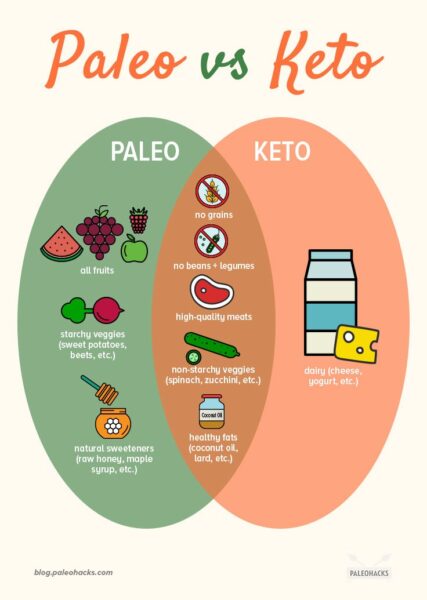
The textbook answer on “Paleo vs Keto” will take a Venn diagram like look at both diets. Showing which foods are both low in carbs, and something our great, great, great, great, great, great, great, great grandmother would have eaten.

Is that enough “greats” to get us to the Paleolithic era? Probably.

Such a Venn diagram would look like this, as demonstrated by Paleohacks.

That’s a textbook graph if I’ve ever seen one. But Venn diagrams are nifty, and an easy way for us to visualize concepts.

For example, we can quickly see that Paleo and Keto overlap on:

  • High-quality meats. Both diets encourage protein coming from high-quality meat sources.
  • Lots of non-starchy vegetables. Whether Keto or Paleo, both include nutrient-dense vegetables like spinach, asparagus, and Brussel sprouts.
  • Plenty of healthy fats. What do coconut oil, avocado oil, and olive oil all have in common? They’re all part of both an ancestral and low-carb way of eating.  

Of course, not all parts of the circles overlap. Such is the nature of a Venn diagram.

For Paleo, you cut out most dairy, because it’s a more modern dietary food group that causes some people problems. This differs from Keto, where you rely on yogurt and cheeses for fat intake.

For Keto, you cut out fruit and starchy vegetables (potatoes) because the high carb content is an easy way to knock you out of ketosis. This differs from Paleo because fruits and potatoes are whole foods that have been eaten for thousands of generations.

Is there anything stopping you from trying both diets? Nope!

When you combine both strategies, for a Keto-Paleo Diet, you’re left eating low-carb foods that our ancestors had access to.

It should be noted, there are some studies proclaiming the benefits of a paleolithic ketogenic diet.[1] Which is logical, because there are studies galore on the benefits of Paleo and Keto, independent of each other.

However, both diets are SUPER restrictive, which is why a lot of folks have trouble maintaining the lifestyle of Paleo or Keto. The adherence rate for either diet is terrible. Both our posts on Paleo and Keto stress this point as an overall con of either diet. When you COMBINE these two very restrictive ways of eating, you could end up creating a nightmare scenario of food limitations.

Alright, you can pack up your bags. Our official answer comparing the Paleo and Keto Diet is over. The lesson is technically finished. Don’t forget to turn in next week’s assignment at the start of class.

Shhh…

Okay, they’ve taken off. Now lean in close. We’re turning off the PowerPoint presentation. It’s time for Professor Steve to give you the after-hours honest truth on Paleo vs. Keto.

THE REAL TALK ON “KETO VS PALEO?”

The reason Keto and Paleo can often work for people centers on the idea of “Mental Models.”

It’s a concept I’ve graciously borrowed from my friend Shane over at Farnam Street Blog. A Mental Model provides a framework for how we understand the world. A way for us to interpret facts and make sense of what we are experiencing.

Shane describes three different Mental Models for looking at the same data:

“When a botanist looks at a forest they may focus on the ecosystem, an environmentalist sees the impact of climate change, a forestry engineer the state of the tree growth, a business person the value of the land. None are wrong, but neither are any of them able to describe the full scope of the forest.”

Bringing it back to nutrition, Paleo and Keto both provide us with a model for understanding food.

  • “That Twinkie is something that came from a factory, that my ancestors would never have touched. It’s unhealthy for me,” says the Paleo follower.
  • “That Twinkie is pumped full of sugar and processed carbs, that’ll kick me right out of ketosis. It’s unhealthy for me,” says the Keto follower.

Two different ways to come to the same conclusion: a Twinkie probably isn’t the healthiest thing you can eat.

We are in a food landscape that almost seems designed to make us sick and fat. Full of candy, soda, and junk food. Food that is easy to overeat, and when you eat too much consistently for weeks/months/years, you end up overweight and staying overweight.

So think of Paleo and Keto as blueprints designed to help you avoid these calorie dense and addictive foods. That’s why they can work for people.

By eliminating large swaths of food groups, especially those that have tons of calories, insulin-spiking sugar, and no nutritional satiating value, you’re more likely than not to eat a caloric deficit consistently. Which can indeed lead to weight loss.

For some evidence of REAL food containing way fewer calories than processed junk, check out this post from wiseGEEK. They do a great job of demonstrating the caloric density of different foods.

That’s why a Mental Model centered on REAL food is the true benefit and overlap of Keto and Paleo, because focusing on REAL food is the easiest way to obtain and maintain a caloric deficit.  

A plan, or Mental Model, to navigate these food choices will be critical for healthy eating. A clear “yes” or “no” for every meal choice you’ll encounter.

It doesn’t matter if cavemen ate grains, or if the metabolic state of ketosis is desirable. That’s not the true advantage of either diet.

Said again: the reason Keto and Paleo can be great for people is that it provides them with rules on exactly what to eat.

  • Is this plate of chicken and broccoli something a caveman could eat? Yep!
  • Is this plate of fish and asparagus low in carbohydrates? You betcha!

Eating plenty of vegetables and high-quality meat is great. Most health professionals would agree. However, a Mental Model on how to go about this can help make food choices automatic, like a robot.

And robots rule.

I want to create such an autopilot for you. A system you can depend on to navigate all the meal decisions you will face.

Let’s find you a Mental Model. Something both reliable and sustainable.

Paleo and Keto are two ways to go about this. But if you’ve tried one, the other, or both and found them too restrictive, don’t give up! There’s more than one way to skin a cat.

I don’t give a sh*t if your Mental Model is low-carb, or if Neanderthals ate that way. There are many different strategies for how to eat. Pick one that works for you and try it out! Adjust and learn as you go. A lot of them will work if you’re consistent, as long as it’s not some “crash diet” designed as a quick fix.

Small, sustainable changes for the win.

If you want help developing a Mental Model, we offer two ways to get you there. If you can hold yourself accountable, the Nerd Fitness Academy will teach you everything you’ve ever wanted to know about a proper relationship with food. You can follow many like-minded nerds and set yourself on a path through our self-guided course.

If you want an accountability buddy, we got you there too! We offer a 1-on-1 private coaching program that can do just that. We’ll work with you to find a Mental Model that works perfect for your situation, and provide direction and accountability until these changes become normal and routine. If you want guidance from a trained professional, schedule a call by clicking on the image below and see if we’re a good fit for each other!

DEVELOP A “MENTAL MODEL” TO LEVEL UP YOUR LIFE

We talk a lot about life as a real-life RFG here at Nerd Fitness. Completing quests and goals to gain experience points so you can take it to the next level in life.

That’s where the “Level Up Your Life” tagline comes from. Almost as if you yourself were a character to be upgraded.

And YES, that DOES also happen to also be the name of my best selling book, available online and in bookstores nationwide, thank you for noticing!

There are all sorts of ways to go about leveling up. Things like lifting weights, sleeping better and, playing with friends will advance you in the game of life, leading to castles raided, dragons slain, and fireworks enjoyed.

If you want to advance onto the next level, one sure fire way to do it would be a Mental Model on how to eat. Paleo and Keto are both great options that have helped a lot of people learn better dietary habits for life improvement.

As I said above though, they are far from the only options. You can go vegan, try the Slow Carb Diet, experiment with intermittent fasting, or act like a Mediterranean.

Or do what I do and invent your own.

With a Mental Model on nutrition under your belt, you can consider your life leveled up.

Then we can worry about equipping you with a flaming sword.

-Steve

PS: For those who were expecting some kind of epic showdown between Paleo and Keto, a battle between two popular diets, here’s a gif for you:

PSS: I’ll end this article by again reminding you of the Nerd Fitness Coaching Program. We work with busy people like you to structure a complete life overhaul: handcrafted workout routines, accountability, mindset changes, and nutritional strategies.

###

All photo citations can be found in this footnote right here.[2]


source https://www.nerdfitness.com/blog/the-paleo-diet-vs-keto-diet-3-lessons-learned/

Friday, 14 December 2018

What are Electrolytes? Is Gatorade good for you?

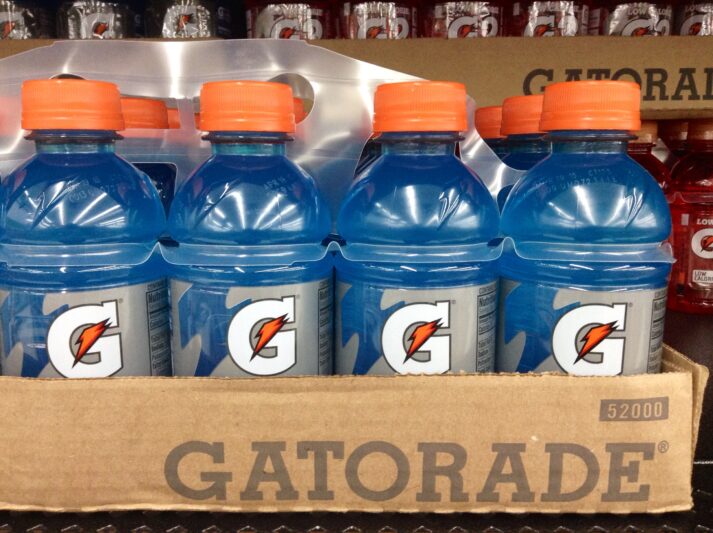
What exactly are electrolytes? You hear them mentioned all the time to sell sports drinks like Gatorade, Powerade, and Brawndo. Do you need them? Are you getting enough? What do electrolytes do for you anyway?

All you hear about is “rehydrate” this, and “electrolyte” that…is all this for real? Were humans born to consume sports drinks?

We’ll be diving into these waters headfirst, to give you everything you need to know about electrolytes:

  • What are these electrolytes?
  • Are you getting enough?
  • Should you be supplementing electrolytes?
  • Are Gatorade and other sports drinks a good idea?

First up, let’s chat chemistry.

WHAT ARE ELECTROLYTES?

Your body is constantly working around the clock to keep itself in balance. One way it does this is with “ionic solutions,” called electrolytes. They work to keep your body, muscles, and nerves functioning properly.

Electrolytes are electrically charged minerals and compounds, which is where the “ion” part comes in. They basically conduct electricity when mixed with water. No electrolytes, means no electricity, means body-no-worky.

There are all kinds of electrolytes, but the most important are:

  • Sodium
  • Chloride
  • Potassium
  • Magnesium
  • Calcium
  • Phosphate
  • Bicarbonate

Again, these are critical for health, which is why your body strives to keep them in order.

Which brings us to your kidneys. Your kidneys exist to help keep your body in balance by regulating the fluids and electrolytes in your body. One way they do this is by making pee – kidneys essentially filter blood so they can get rid of waste products like urea and ammonia.

When you are dehydrated, your kidneys make your pee as concentrated as possible to keep water in the body. When you are well hydrated, your kidneys let more water leave with the waste. Which is why your pee looks different depending on how hydrated you are (we’ll touch on this again later).

Bringing it back to our topic at hand, your kidneys also regulate the concentration of electrolytes in your blood.

When you work out, you sweat (trust me on this one, I’m a fitness expert). When you sweat, you lose fluids and electrolytes – especially sodium and chloride (which is why your sweat tastes salty…stop tasting your sweat you creep). Now, when you’re lacking fluids and electrolytes, your muscles suffer and your performance suffers.

Which is why having your electrolytes in balance is so crucial.

I can see the concern on your face already.

If I’ve lost you, and the idea of performance issues stresses you out, we got you. We created a 1-on-1 private online coaching program to answer questions just like “Do I need to supplement my workout with electrolytes?”

We work with busy people just like you to help establish goals and plans to achieve them. If you have tons of questions or want an accountability partner, we are here for you.

Click below to find out if we are a good fit for each other. We’ll schedule you a free call with a member of Team Nerd Fitness, who would love to talk to you no matter what!

AM I GETTING ENOUGH ELECTROLYTES?

Not only can you lack electrolytes, but you can also have TOO MANY. Electrolytes take on a positive or negative charge when they dissolve in your body fluid. So having too many of some and not enough of another can create problems.

Ugh. Fitness can be complicated.

Here are some signs that things are out of whack:

  • Dehydration. If you don’t have enough water in your system, your electrolytes will be out of balance. As we mentioned, electrolytes dissolve in water, so if you are dehydrated almost by definition you are lacking electrolytes. Drink up. Again, we’ll talk about pee color as a sign of hydration later.
  • Diarrhea and constipation. Gross. However, we need to chat about this. Poop is mostly made out of water, so diarrhea and constipation could be a sign of an electrolyte imbalance. Plus, if you get a viral infection and get diarrhea, you can become dehydrated and then… more electrolyte imbalances. If you have problems going #2, see your doctor if this lasts for more than a few days.
  • Fatigue. A common symptom of an electrolyte disorder is fatigue. If you’re feeling groggy, something might be off with your electrolytes, specifically a lack of magnesium. Many different body processes depend on magnesium, so being deficient can make you feel chronically tired.
  • Muscle cramp. Has your muscle ever freaked out and felt like it was trying to detach itself from the bone? Almost as if your leg was going to snap in half? That’s a muscle cramp, and likely caused by an electrolyte imbalance or dehydration.

Generally, if your electrolytes are out of balance, it’s because you are deficient. It’s way more common to have too few than too many electrolytes. Which is why proper hydration is so critical.

Now that I’ve convinced you that you are going to die a miserable and terrible death from the lack of electrolytes, let’s chat about Gatorade.

SPORTS DRINKS TO THE RESCUE?

How does Gatorade (or any sports drink–they’re all about the same) work?

Sticking to the theme of this article, it comes down to electrolytes. Water will get into your bloodstream faster (and to the right places) when it’s mixed with electrolytes, because water follows electrolytes. Said another way, the absorption of water depends on sodium, an electrolyte.

And Gatorade, like Brawndo, has electrolytes.

Gatorade has a good amount of sodium, as well as glucose (sugar). And your small intestines LOVE glucose. The little transporters in your small intestines will pick up that glucose, and in turn pick up the sodium. If they‘re picking up glucose and sodium, they’re also grabbing the H20, and BOOM! You’re getting rehydrated faster. That’s the theory, and there is some evidence in support.[1]

Another benefit of Gatorade is that sodium minimizes urination (Remember osmosis from high school chemistry? Water goes where the salt is). When you’re drinking Gatorade, the liquid will stay in your body longer, giving it more time to get absorbed, which will get you back into balance quicker!

So I realize this section reads like an ad for Gatorade. Pay no attention to the bag of money left for me in the corner. All this talk about how great Gatorade is at getting you rehydrated quicker will REALLY only affect you if you’re doing hours and hours of strenuous activity. That report mentioned above was critical on this point. If you’re just working out for 45 minutes, drinking water throughout the workout and afterward will keep you plenty hydrated. You can forgo a sports drink.

However, if you’re running a marathon, Gatorade might be a good idea.

You know what isn’t a good idea? Bourbon. Trust me on this one.

However, I run a fitness site here. So I can’t let this be the final word on Gatorade.

Is Gatorade healthy?

Reality check: Gatorade is essentially sugar water with some electrolytes added.

And sugar can make you fat.

If you’re looking to burn fat, drinking a 32 oz Gatorade will probably put back all the calories you just burned off during your workout (there are about 200-240 calories in there, most of which is sugar).

It comes down to total calories consumed vs. total calories burned every day. To lose body fat, you need to be in a caloric deficit, meaning you need to burn more than you consume. Drinking Gatorade can make this equation more difficult to tip in your favor.

So if you are doing moderate exercise, or even strenuous exercise for a shorter (an hour or so) amount of time, water should suffice.

If you are running marathons or doing hours of intense work, then replenishing your electrolytes is important. And one way to do that could be Gatorade.

Just don’t sit on your couch eating donuts and drinking Gatorade, despite the presence of electrolytes. The sugar will go straight to your gut!

Are you doomed? Do you have to drink sugar water to get enough electrolytes?

OTHER WAYS TO SUPPLEMENT ELECTROLYTES  

All sorts of foods contain electrolytes. Our caveman ancestors didn’t have access to Fierce: Melon. They had to get their electrolytes from food.

This is still a good strategy.

Here are some ideas on how to eat your electrolytes:

  • Fish. Salmon, sardines, and mackerel all have high concentrations of calcium. A diet high in fish, like the Mediterranean, might be a good idea in this regard.
  • Fruit. Bananas, as well as oranges and melons, are a good source of potassium. So are avocados, which are also technically in the fruit family.
  • Nuts and seeds. If you’re looking for food with magnesium, look to nuts and seeds. Almonds, Brazil nuts, cashews, pumpkin and watermelon seeds are all a great source of magnesium.
  • Spinach. This leafy green is packed full of electrolytes. One cup of spinach contains 839 mg of potassium, 245 mg of calcium, and 157 mg of magnesium. Popeye was on to something.

I’ll also note, that most REAL food (mushrooms, lentils, peas), will have micronutrients like electrolytes. Processed food like a Twinkie? Not so much.

If you eat a diet containing mostly REAL food, you should be fine on electrolytes. We evolved to get our nutrients from the foods we eat. If you want more guidance on what healthy eating means, make sure you check out our Guide on Healthy Eating. We explain what REAL food is, plus give you guidance on how to move your diet in that direction.

It should be noted that if you want to supplement with extra electrolytes, you don’t have to swig Gatorade. There are plenty of electrolytes on the market. Mix some with water after a workout and you’ll be good to go. This, plus lightly salting your food will do the trick.

I’ll end this section by saying that some low-carb diets like Keto can cause you to lose water and electrolytes along with it. We dive in the subject pretty heavily in our guide, but it’s good to keep in mind that if you are going low-carb, you’ll likely need more electrolytes than the average person.

Okay. That about does it. However, I promised we’d get to it.

LET’S TALK ABOUT YOUR URINE  

We started this article talking about pee. And like a Quentin Tarantino movie, that’s how we’ll end it. With pee. This joke worked in my head…

  • Do you have pale yellow pee? You’re right on track.
  • Bright or dark yellow pee? Make a few more trips to the water cooler.
  • Mountain Dew colored pee? Your body is severely dehydrated.
  • Any other color of the rainbow? RUN to the doctor.

-Steve

PS: If you want an accountability partner to answer all your fitness questions, I’ll again remind you of the Nerd Fitness Coaching Program. We can give you feedback on workouts, nutrition, and other lifestyle habits. We can even take a look at the color of your pee to see if you’re dehydrated.[2]

**All photo credits can be found right here[3]**


source https://www.nerdfitness.com/blog/what-the-eff-is-an-electrolyte-is-gatorade-the-real-deal/